Plainlight Press

Field Manual No. 1 · Emergency preparedness

When the grid goes quiet and help is days away,

Be the housewith the lights on.

The Home Front Manual is a 240-page field guide that walks your household, step by step, through power outages, storms, water emergencies, house fires and evacuations. Plain English, no fear-mongering, and everything you need to stay safe, warm, fed and in control.
  • Instant PDF download
  • Prints on any home printer
  • 30-day money-back guarantee
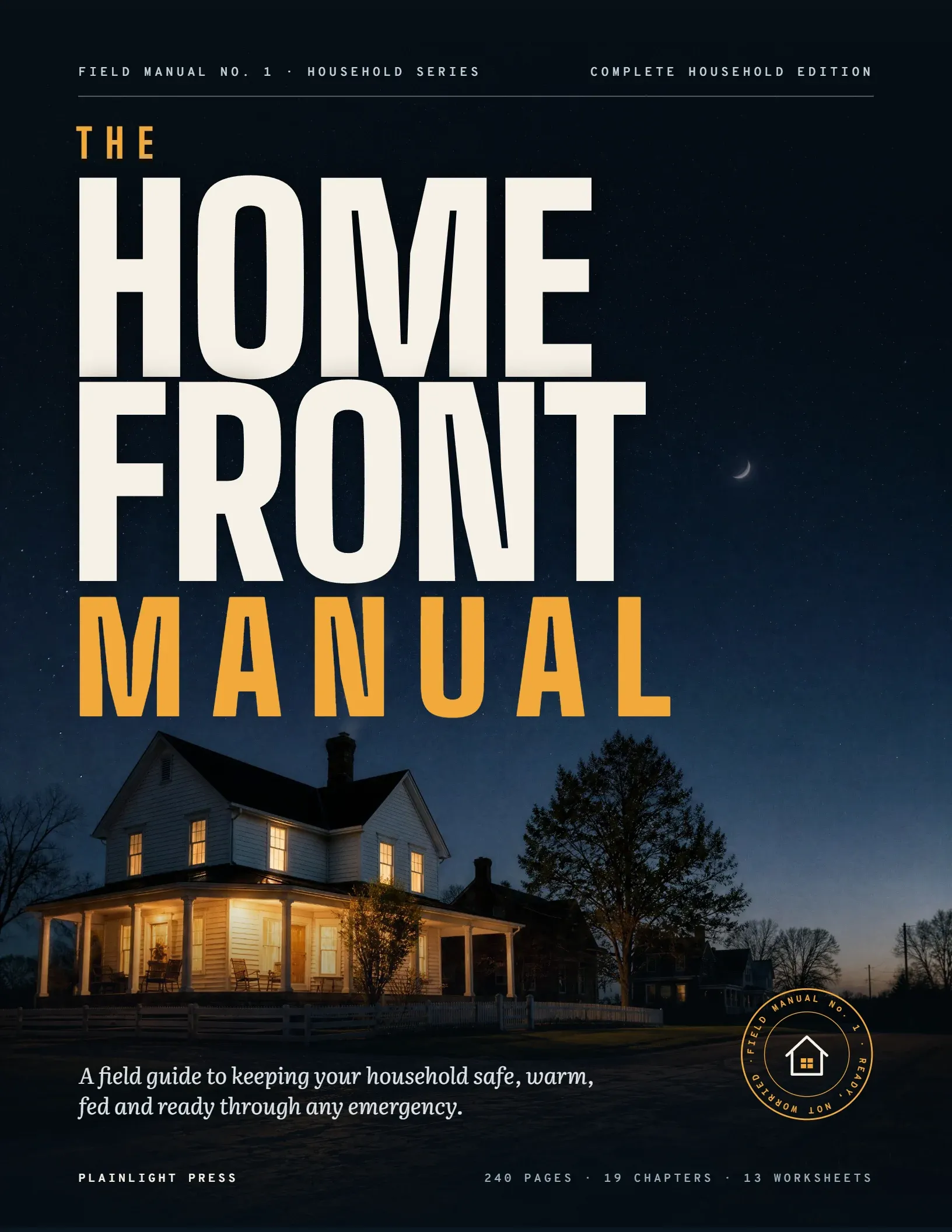
Cover of The Home Front Manual: A Field Guide to Keeping Your Household Safe, Warm, Fed and Ready Through Any Emergency
Digital edition · PDF

The first 72 hours

Most outages end in minutes. Some last for days.

When the power stays out, a clock starts on your food, your water, your heat and your patience. Here is what the first three days really look like, and what the manual has you do at each step.

  1. Hour00

    The lights go out

    In the first minutes you can’t know whether this is a five-minute blip or a five-day outage. Treat it as the long kind until you know otherwise.

    The manual has youFlashlights, not candles. Check on everyone, report the outage, unplug sensitive electronics and write down the time.

    Chapter 14, page 146

  2. Hour04

    The refrigerator line

    According to the USDA, a closed refrigerator keeps food safe for about four hours without power.

    The manual has youBefore the four-hour mark, move milk, meat and leftovers into coolers with ice. Keep the freezer door shut.

    Chapter 5, page 60

  3. Hour12

    The first night

    Now heat or cooling becomes the real problem, and so does carbon monoxide. Generators, grills and camp stoves must never run inside the home or garage.

    The manual has youSet up one warm (or cool) room, light it with LED lanterns, and keep a battery-powered CO alarm on guard.

    Chapter 7, page 78

  4. Hour24

    The half-full freezer line

    A half-full freezer keeps food frozen safely for about 24 hours if the door stays closed (USDA).

    The manual has youCheck in with your out-of-area contact, start the no-fuss cooking plan, and set up sanitation if the water is off.

    Chapter 14, page 149

  5. Hour48

    The full freezer line

    A full freezer holds for about 48 hours (USDA). Across the neighborhood, phone batteries, cash and patience start running low.

    The manual has youCheck on neighbors, keep a daily routine, and take stock of what you will need if this keeps going.

    Chapter 14, page 149

  6. Hour72

    Stay or go?

    Emergency officials ask every household to be able to care for itself for at least the first few days of a disaster.

    The manual has youUse the manual’s stay-or-go checklist to decide whether to keep sheltering at home or head somewhere safer.

    Chapter 14, page 150

How the manual works

One household.
Three Ready Levels.

Every supply chapter is built around the same three goals, so you always know what “ready” means and what to do next. Reach Level 1 this month. Build to Level 2, the standard we recommend for every household. Go on to Level 3 if you want a deeper cushion.

  1. Level172 Hours

    The minimum. Enough to manage on your own for three days, packed so it can go with you if you have to leave.

    Water
    3 gallons per person
    Food
    No-cook, ready-to-eat
    Light & power
    Flashlights, radio, power bank
  2. Level2Two Weeks

    The household standard we recommend. Stay home through a long outage warm, lit, fed, clean and informed.

    Water
    14 gallons per person
    Food
    A pantry you cook from
    Light & power
    Plus a safe backup plan for power
  3. Level3Thirty Days

    A deeper reserve for households that want extra cushion against long disruptions.

    Water
    30 gallons, or a source plus treatment
    Food
    Bulk staples, rotated
    Light & power
    Longer-running backup power
  • 240pages
  • 19chapters
  • 8master checklists
  • 13printable worksheets
  • 30day action plan

Your home, mapped

The readiness house

Most of what keeps a household safe is already in the house, or easily could be. Tap any numbered tag to see what the manual covers, and where.

Cutaway drawing of a two-story house with a basement, showing where emergency supplies and shutoffs belong.Curb stopAtticBedroomBathKitchenLiving roomBasementExhaust20 ft min.The Readiness HouseThe Home Front ManualSheet1 of 1ScaleNot to scale

Swipe the drawing sideways to see the whole house.

Tag 01 of 14

Water main shutoff

If a pipe bursts, this valve stops the flood. Find it, test it and tag it before you ever need it.

Chapter 13 · Utilities & Shutoffs · page 137

Look inside

Real pages.
Real steps.

These are actual pages from the manual: large, clear type, safety notices you can’t miss, and plenty of room to write. Select any page to see it full size.

What’s inside

Every chapter,
page by page.

Nineteen chapters in five parts, from the mindset and the plan to water, food, power and heat, protecting the house, and getting through the event itself. Open any chapter to see what it covers.

Pages
240
Chapters
19
Worksheets
13
Day plan
30
Part One

Get Ready

p. 10
01Ready, Not WorriedThe Home Front Mindsetp. 11

“Getting ready is simply good housekeeping for hard days.”

You will learn

  • Why readiness is an old American household habit
  • How real emergencies unfold, and how long they last
  • The three rings: home, household and neighborhood
  • The Ready Levels that organize this manual
  • What to take care of first, in order
  • How to start calmly, without panic buying

Sections

  1. An Old American Habit
  2. How Emergencies Really Unfold
  3. The Three Rings of Readiness
  4. The Ready Levels
  5. First Things First
  6. Calm Over Panic
  7. How to Use This Manual
02Know Your RisksA Twenty-Minute Hazard Check for Your Householdp. 19

“You can't prepare for everything. Prepare for what's likely.”

You will learn

  • Where to look up the hazards for your address
  • Twelve common hazards in plain English
  • Household factors that raise or lower your risk
  • A simple way to score and rank your risks
  • A worked example for a hypothetical household

Sections

  1. Where to Look Up Your Local Hazards
  2. Twelve Hazards in Brief
  3. Household Factors That Change Your Plan
  4. Score Your Risks
03The Family Emergency PlanWho Does What, Who Calls Whom, and Where Everyone Meetsp. 29

“A plan on paper beats good intentions every time.”

You will learn

  • Why a written plan beats good intentions
  • A communication plan that works when phones don't
  • Three meeting places every household needs
  • Clear jobs for everyone, pets included
  • Protecting your important papers
  • Planning across generations and practicing twice a year

Sections

  1. Why a Written Plan Beats Good Intentions
  2. Build Your Communication Plan
  3. Pick Three Meeting Places
  4. Give Everyone a Job
  5. Protect Your Important Papers
  6. Plan Across the Generations
  7. Practice Twice a Year
Part Two

The Essentials

p. 39
04WaterThe Three-Level Water Planp. 40

“Of everything in this manual, water matters soonest.”

You will learn

  • How much water your household really needs
  • Choosing, cleaning and filling storage containers
  • The hidden water already inside your home
  • Four ways to make questionable water safe
  • What to do under a boil-water advisory
  • Extra steps for private well owners

Sections

  1. How Much Water Your Household Needs
  2. Choosing Your Containers
  3. Cleaning, Filling and Storing
  4. The Hidden Water in Your Home
  5. Water From Outside the Home
  6. Four Ways to Make Water Safe
  7. When a Boil-Water Advisory Comes
  8. If You Have a Private Well
05FoodA Pantry That Actually Gets Eatenp. 53

“The best emergency pantry is the one you already cook from.”

You will learn

  • Four rules for a pantry your household will actually eat
  • Building two weeks of food a little at a time
  • Shelf life, safe storage and when to toss a can
  • Planning for special diets, infants and pets
  • Cooking safely when the power is out
  • Fridge and freezer safety, plus a two-week menu for two

Sections

  1. Four Rules for an Emergency Pantry
  2. Food at Every Ready Level
  3. Building It a Little at a Time
  4. Shelf Life and Safe Storage
  5. Special Diets and Needs
  6. Cooking Without Power
  7. Keeping Fridge and Freezer Food Safe
  8. A Two-Week Menu for Two
06Power & LightWhen the Grid Goes Quietp. 65

“The safest outage power is the kind you planned for.”

You will learn

  • Safe light, and why flashlights beat candles
  • Batteries and power banks that are ready when you are
  • Power stations and generators, sized to your real needs
  • Generator safety: carbon monoxide, cords and backfeeding
  • What to power first, and what to do in the first hour

Sections

  1. Light First
  2. Batteries: Standardize, Store, Check
  3. Phones and Small Devices
  4. Portable Power Stations
  5. Portable Generators
  6. Standby Generators
  7. What to Power First
  8. Outage Habits
07Heat & ColdStaying Safe When the Thermostat Can't Helpp. 77

“The goal is a safe body, not a comfortable house.”

You will learn

  • Turning one room into a warm winter shelter
  • Safe heat sources, and what never to use indoors
  • Spotting hypothermia and frostbite, and what to do
  • Keeping pipes from freezing, and thawing them safely
  • Getting through summer heat without air conditioning
  • Wildfire smoke: how to keep one room clean

Sections

  1. Winter Outage: Make One Warm Room
  2. Safe Heat, and the Kinds to Avoid
  3. Hypothermia and Frostbite
  4. Frozen Pipes
  5. Summer Heat
  6. Wildfire Smoke and Poor Air Days
08Sanitation & HygieneWhen the Toilet Won't Flushp. 86

“A bucket, a bag and a plan keep a household healthy.”

You will learn

  • Flushing by hand when the water is off
  • Building an emergency toilet when the sewer fails
  • Keeping clean with very little water
  • Trash, pests and a safe bleach solution

Sections

  1. Why Sanitation Matters
  2. First, Know Which Problem You Have
  3. When the Water Is Off but the Sewer Works
  4. When the Sewer Fails: The Emergency Toilet
  5. Clean Hands With Little Water
  6. Bathing and Brushing With Little Water
  7. Trash, Pests and Safe Disinfecting
  8. Your Sanitation Supply Kit
09First Aid & MedicationsYour Household Medical Planp. 94

“The best first-aid kit is a pair of trained hands.”

You will learn

  • Why a first-aid class beats any book, this one included
  • Stocking a family first-aid kit and a go-bag kit
  • When to call 911, and how to get through
  • Basic care for bleeding, burns, sprains and cuts
  • Keeping medicines, insulin and medical equipment going
  • Where to turn when the stress gets heavy

Sections

  1. Get Trained First
  2. Build Your Household First-Aid Kit
  3. When to Call 911
  4. First-Aid Basics: A Refresher, Not a Course
  5. Medications: Never Run Short
  6. Medical Equipment and Everyday Aids
  7. Caring for Your Peace of Mind
10CommunicationsStaying Informed When the Phones Go Quietp. 106

“Information is a supply, too. Stock it like water.”

You will learn

  • The alert systems that can wake you at night
  • Setting up a NOAA Weather Radio the right way
  • Getting calls and texts through jammed networks
  • FRS, GMRS, ham and CB radios without the hype
  • Neighborhood check-ins and keeping rumors in check
  • Paper backups that never need charging

Sections

  1. How Warnings Reach You
  2. A Radio That Needs No Outlet
  3. Phones in a Disaster
  4. Two-Way Radios Without the Hype
  5. Talking With the Neighbors
  6. Information Discipline
  7. Paper Backups
Part Three

Protect the Home

p. 115
11Fire Safety & Home HardeningDefending Your Home Against Fire, Wind, Water and Shakingp. 116

“Buy yourself time now, while time is cheap.”

You will learn

  • Smoke and CO alarms that will actually wake you
  • Fire extinguishers, and when to walk away instead
  • An escape plan that works for everyone in the house
  • Hardening your home against wildfire embers
  • Bracing for wind, rising water and shaking ground

Sections

  1. Smoke Alarms: Your Early Warning
  2. Fire Extinguishers: For Small Fires Only
  3. Your Home Fire Escape Plan
  4. Wildfire: Defend the Home Ignition Zone
  5. Wind: Keep the Wind Out and the Roof On
  6. Water: Keep the Flood Out and the Coverage In
  7. Earthquake: Strap, Anchor, Then Drop
12Home SecurityKeeping Your Home Secure When Things Get Uncertainp. 128

“Good locks, good light, good neighbors, and 911.”

You will learn

  • Why deterrence and neighbors beat confrontation
  • Doors, strike plates and locks that hold
  • Lighting and landscaping that work without the grid
  • Keeping the house secure through a long outage
  • Spotting the scams that follow every disaster
  • Building a neighborhood skills-and-needs list

Sections

  1. Deter, Delay, Notice, Call
  2. Doors and Locks
  3. Lighting and Landscaping
  4. Security in an Outage
  5. Scams That Follow Disasters
  6. Know Your Neighbors
13Utilities & ShutoffsThe Valves and Switches Every Homeowner Should Knowp. 136

“Find every shutoff now, while nothing is wrong.”

You will learn

  • Finding and testing your main water valve
  • Using your electrical panel safely
  • Natural gas: when to shut off, and who turns it back on
  • Propane tanks, sump pumps, well pumps and septic systems
  • Tagging every shutoff and drawing a utility map

Sections

  1. Water: Find the Main Valve
  2. Electricity: The Main Panel
  3. Natural Gas: Shut Off Only When You Need To
  4. Propane Tanks
  5. Sump Pumps, Well Pumps and Septic Systems
  6. Tag Everything and Draw the Map
Part Four

When It Happens

p. 143
14Sheltering in PlaceThe First 72 Hours, Hour by Hourp. 144

“The first hour sets the tone for the next seventy-one.”

You will learn

  • The two very different meanings of sheltering in place
  • How to seal a room during a chemical emergency
  • An hour-by-hour playbook for a long power outage
  • Watches, warnings and the hurricane countdown
  • A simple routine for boil-water notices
  • Keeping spirits and routines steady at home

Sections

  1. Two Kinds of Sheltering in Place
  2. The 72-Hour Outage Playbook
  3. Before a Forecast Storm
  4. The Boil-Water Notice Playbook
  5. Routine and Morale
15EvacuationWhen to Go, What to Take, Where to Headp. 155

“Leave early, leave calm, and take what can't be replaced.”

You will learn

  • When to leave, and why earlier is better
  • A go-bag for every person in the house
  • The five P's and the 10-minute grab list
  • Readying the car and planning your routes
  • Family, hotels or public shelters: what to expect
  • What to do before you lock the door

Sections

  1. When to Leave
  2. The Go-Bag
  3. The Five P's and the Grab Lists
  4. The Vehicle
  5. Where to Go
  6. Before You Lock the Door
  7. Special-Needs Registries
16RecoveryAfter the Storm Passesp. 166

“The danger is not over when the wind stops.”

You will learn

  • Going home safely, and the hazards waiting there
  • Stopping mold before it starts
  • What food and water to keep or throw out
  • Documenting damage so insurance works for you
  • Finding aid and hiring honest help
  • Caring for your nerves and your neighbors

Sections

  1. Going Home Safely
  2. Mold: Why Speed Matters
  3. Food and Water After an Outage or Flood
  4. Document Before You Clean
  5. Help With the Cost
  6. Hiring Contractors Without Getting Burned
  7. Taking Care of Yourselves
  8. The After-Action Review
  9. Neighbors Helping Neighbors
Part Five

Make It Yours

p. 174
17Every Household Is DifferentOlder Adults, Medical Needs, Pets and Grandkidsp. 175

“Plan for the household you actually have.”

You will learn

  • A support network that checks on you
  • Medical equipment, dialysis and memory loss
  • Caring for a spouse when routines break down
  • Pets, backyard chickens and livestock
  • Keeping grandkids safe, calm and busy
  • What changes for renters and apartment dwellers

Sections

  1. Older Adults and Medical Needs
  2. Pets and Other Animals
  3. Grandkids in Your Care
  4. Renters and Apartment Dwellers
18Ready on Any BudgetSmart Preparedness Without Overspendingp. 185

“Readiness is built a little at a time.”

You will learn

  • A walk-through of what you already own
  • Free and nearly free steps to take now
  • Three shopping plans: Starter, Solid and Strong
  • How to spot gimmicks and judge what is worth buying
  • Ways to save, share and spread the cost

Sections

  1. Start With What You Already Own
  2. Free and Nearly Free Steps
  3. Three Shopping Plans
  4. Buying Smart
  5. Ways to Save
19The 30-Day Home Front PlanOne Month, One Task a Day, a Ready Homep. 192

“One small job a day, and a ready home in a month.”

You will learn

  • How to work the plan at your own pace
  • Week 1: your risks, your plan and your water
  • Week 2: a pantry you'll use and light you can trust
  • Week 3: power, heat, health and staying informed
  • Week 4: protecting the home and practicing to go
  • A year-round calendar that keeps you ready

Sections

  1. How to Work the Plan
  2. The Finish Line
  3. Keeping It Ready All Year
Appendices

Print, Post & Keep

AMaster ChecklistsEvery list in the book, gathered into printable one-page checklists.p. 210
BPrintable WorksheetsFill-in forms for contacts, medications, shutoffs, supplies and more.p. 215
CQuick ReferenceBoil times, bleach ratios, food-safety lines and warning signs at a glance.p. 229
DResourcesWhere to find the latest official guidance, by topic.p. 235

Readiness check

How ready is your household, really?

Twelve quick questions. Answer honestly; your answers stay on this page and are never sent anywhere. Your score shows the chapters to start with.

01Do you have at least three days of water stored for everyone in your home? One gallon per person, per day.
02Could your household eat well for two weeks without going to the store?
03Do you have flashlights or lanterns (not candles) and spare batteries in a spot everyone knows?
04Are there working smoke alarms and carbon monoxide alarms on every level of your home?
05Does everyone in your household know where to meet and who to call if the phones are down?
06Could you find and close your water main and gas shutoff in the dark?
07Do you have a battery or hand-crank radio that receives NOAA Weather Radio alerts?
08Do you have at least a week of everyone’s prescriptions on hand, plus a written medication list?
09Do you have a safe plan to stay warm, or cool, for several days without power?
10Is there a go-bag packed for each person that you could grab in ten minutes?
11Do you know what to do if the toilet can’t be flushed for several days?
12Are copies of your important documents in a waterproof, grab-and-go pouch?

Who it’s for

Written for real households, not bunkers.

This manual is for you if…

  • You want your home ready for the emergencies that actually happen: outages, storms, floods, fires and evacuations.
  • You would rather count on your own preparation than wait and hope help arrives quickly.
  • You look after other people: a spouse, aging parents, grandkids or pets.
  • You want clear steps, large type and checklists you can print, not a pile of internet tips.
  • You want to prepare sensibly and on a budget, without panic buying.

It is not…

  • A doomsday or bunker manual. It covers realistic emergencies, calmly.
  • Political. No agenda and no scare tactics, just preparation.
  • A gear catalog. It names no brands and sells you nothing else.
  • A substitute for official instructions, licensed professionals or 911.
  1. 01

    Calm, not fear

    No scare tactics and no doomsday talk. Just the steps that keep a household safe, explained by a steady voice.

  2. 02

    Plain English, large type

    Short sentences, real quantities and big, clear pages that are easy to read with or without reading glasses.

  3. 03

    Built on official guidance

    Drawn from published guidance by FEMA and Ready.gov, the CDC, the EPA, the USDA, the National Weather Service, the American Red Cross and the NFPA.

The Home Front Manual is an independent publication. It is not affiliated with or endorsed by any government agency or the organizations named above.

Get the manual

Everything in one book. One price.

Cover of The Home Front Manual: A Field Guide to Keeping Your Household Safe, Warm, Fed and Ready Through Any Emergency
Digital edition · PDF
Format
PDF, instant download
Page size
US Letter, 8.5 × 11 in
Pages
240
Works on
Computer, tablet, phone
Printing
Any home printer
Navigation
Clickable contents & bookmarks
  • The Home Front Manual240-page PDF, Complete Household Edition
  • 19 chapters in 5 partsWater, food, power, heat, sanitation, health, security, evacuation and recovery
  • In an Emergency, Start HereAn emergency index that points you to the right page fast
  • The 30-Day Home Front PlanOne short task a day, with the time and cost of each
  • Master checklistsKits, go-bags, storm prep and more, ready to print
  • 13 printable worksheetsContacts, medications, shutoffs, supplies and your evacuation plan
  • Quick reference & resourcesBoil times, bleach ratios, warning signs and trusted sources

One-time payment · No subscription

Get Instant Access $276

Instant download. Gumroad shows your download link right after checkout and emails it to you with your receipt.

30-day money-back guarantee

Read it, print it and put it to work. If the manual isn’t right for your household, reply to your Gumroad receipt within 30 days of purchase for a full refund.

Better value

Get all three manuals for $597 (save $231)

The Complete Library adds The Digital Front Door and The Kitchen Table Money Plan.

Secure checkout by Gumroad, the seller of record for every order.

Questions

Straight answers.

Still deciding? Here is what people usually ask before they order.

Is this a doomsday or “prepper” book?

No. It covers the emergencies American households actually face: power outages, severe storms, winter storms, heat waves, floods, wildfires, earthquakes, water disruptions, house fires and evacuations. The tone is calm and practical. Ready, not worried.

Do I need to buy a lot of expensive gear?

No. Chapter 18 shows how to get ready on any budget, starting with what you already own. The manual names no brands and sells you nothing else.

I’m not very handy. Is this for me?

Yes. Every step is written for an ordinary homeowner. Where a job needs a licensed electrician, a plumber or the gas company, the manual says so plainly.

Where does the advice come from?

The manual explains, in plain English, published guidance from FEMA and Ready.gov, the CDC, the EPA, the USDA, the National Weather Service, the American Red Cross, the National Fire Protection Association and other recognized sources. It is an independent publication and is not endorsed by those organizations. In a real emergency, official instructions always come first.

How do I get my book after I order?

Checkout is handled by Gumroad. Right after you pay, Gumroad shows your download link and emails you a receipt with the link, so you can download the PDF again any time.

What format is it? Can I print it?

It’s a PDF laid out on US Letter pages (8.5 × 11 in). It works on computers, tablets and phones, with a clickable table of contents and bookmarks, and it prints on any home printer.

What if it isn’t right for my household?

You’re covered by a 30-day money-back guarantee. Reply to your Gumroad receipt or use our contact page within 30 days of your purchase for a full refund.

Can I print copies for my family?

Your purchase covers your household. Print as many copies of the checklists, worksheets and quick-reference pages as your household needs.

Is it political?

No. There’s no politics in any of our books, just practical steps.

Is checkout secure?

Yes. Gumroad processes every order through an encrypted checkout and acts as the seller of record, handling payment and sales tax. We never see your card details.

Can I get all three manuals together?

Yes. The Complete Library includes all three manuals for $597, $231 less than buying them one at a time at $276 each.

Start tonight

Ready,
not worried.

Thirty days from now, your household can be ready for the emergencies that really happen, one short task at a time.

Get the Manual $276